How to Help Your Child Improve in Math, Step by Step

How to Help Your Child Improve in Math, Step by Step
Helping your child practice math from an early age can make a big difference in their confidence and overall learning. Regular practice not only helps children become more comfortable with numbers, but also supports their logical thinking, problem-solving skills, and ability to approach challenges.
Many parents find it difficult to keep their children motivated when learning math. Some children become frustrated when they make mistakes, while others may feel nervous about numbers or struggle to understand certain concepts. Parents may also find it challenging to explain a topic in a way their child understands. With a little patience and the right approach, however, math practice at home can become much easier and more enjoyable.
Practical Tips
Here are some simple ways you can help your child improve in math step by step. The most important things are to be consistent, patient, and encouraging.
Create a Positive Learning Environment
• Encourage your child to see math as something useful rather than something to be afraid of. Point out how numbers and simple calculations are part of everyday life.
• Create a quiet and comfortable place where your child can study without too many distractions. Keep useful materials nearby, such as textbooks, worksheets, pencils, and math games.
• Be patient when your child struggles. Offer encouragement and focus on their progress instead of comparing them with other children.
Use Interactive Methods
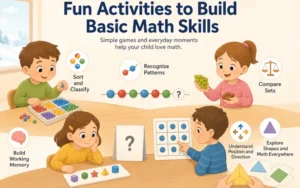
• Make math more interesting by using games, puzzles, hands-on activities, and age-appropriate educational apps. Children often learn better when they can actively participate.
• Use familiar objects and everyday situations when explaining math. Shopping, cooking, measuring ingredients, telling time, or sharing objects can all provide simple opportunities to practice math.
Set Achievable Goals
• Help your child choose small and realistic goals. Instead of trying to master a whole topic at once, break it into smaller tasks that feel easier to manage.
• Celebrate progress, even when it seems small. Solving a difficult problem independently or understanding a concept that was confusing before is worth recognizing. Positive feedback can help children stay motivated.
Practice Regularly
• Encourage your child to spend a little time practicing math regularly. Reviewing previous topics while gradually introducing new ones can help keep skills fresh.
• Give your child extra problems to solve at home, but avoid making practice feel like a punishment. A few well-chosen questions can often be more useful than a long worksheet.
Guide the Process and Strengthen Understanding
• Ask your child to explain how they found an answer. Listening to their reasoning can help you understand what they know and where they may be having difficulty.
• Treat mistakes as part of learning. Instead of simply giving the correct answer, look at the steps your child took, identify the misunderstanding, and then try a similar problem together.
• Mix different types of activities during practice. Combine basic arithmetic with puzzles, word problems, logical thinking, and reading-based questions. This helps children understand that math is not only about remembering rules—it is also about thinking, making connections, and solving problems.







Post Comment