Helping Your 3rd Grader with Math (Without the Tears)
 By
By Helping Your 3rd Grader with Math (Without the Tears)
Let’s be honest: third-grade math is where things start getting real. Suddenly, your child is dealing with bigger numbers, multiplication tables, word problems, and tests. It can feel like a lot. But helping them practice at home doesn’t have to be a battle. Here is how to make math a calm, everyday routine that actually builds their confidence.
What’s Going On in 3rd Grade Math?
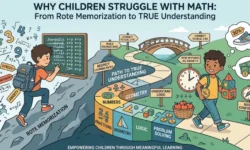
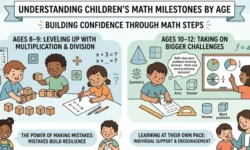
For many families, this year feels like a massive leap. Numbers get bigger, questions take multiple steps to solve, and written problem-solving becomes a big deal. If your child feels overwhelmed, remind yourself that this is completely normal. They aren’t supposed to get it all perfectly on day one. They need time, practice, and problems that meet them exactly where they are right now.
At this stage, it’s not just about the correct answer. Teachers want kids to explain how they got there, spot patterns, and check their own work. This is exactly where you can help. Short practice sessions, real-life examples, and just staying patient go a incredibly long way.
What’s on the Syllabus?
Curriculums vary depending on your state, but you can generally expect your third grader to tackle these core concepts:
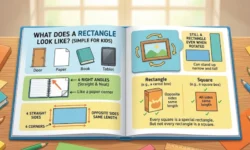
• Numbers up to 1,000: Reading, writing, comparing, and plotting them on number lines. • Addition and subtraction: Mental math, semi-written strategies, and standard written methods. • Multiplication and division: Mastering times tables, understanding remainders, and seeing how multiplying and dividing connect. • Word problems: Pulling out important details, picking the right calculation, and writing down the answer. • Measurements: Using money, time, weight, length, and volume in real-world scenarios. • Geometry: 3D shapes, area, symmetry, patterns, and right angles.
If your child is still struggling with second-grade concepts, you’re definitely not alone. Don’t be afraid to gently review those basics before pushing forward into harder territory.
Great Practice Problems to Try at Home
Good practice isn’t about endless worksheets; it’s about a few meaningful problems. Ten to fifteen minutes is honestly plenty if they are truly thinking.
Numbers Up to 1,000 • Put these in order: 408, 480, 84, 804, 840. • What number is exactly halfway between 350 and 370? • Break 726 down into hundreds, tens, and ones. • Name three numbers bigger than 590 but smaller than 610.
Addition and Subtraction • 340 + 280 = ? (Explain how you figured it out in your head.) • 725 – 199 = ? (Is there a smart trick to make this easier?) • What math problem fits this story: I saved $650 and spent $275? • Make up a subtraction problem where the answer is 318. (If subtraction causes frustration, revisit simpler problems like 13 – 5 to build their footing back up. It’s not a step backward, just a helpful pause.)
Multiplication and Division • 7 × 8 = ? What easier problem helps you solve this? • 56 ÷ 7 = ? Write the matching multiplication problem. • A bookcase has 6 shelves with 9 books each. How many books total? • 37 candies are shared among 5 kids. How many does each get, and how many are left over?