How Parents Can Help Their Children Learn Math

How Parents Can Help Their Children Learn Math
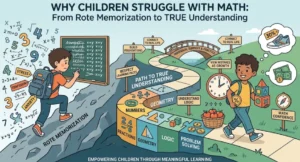
A child’s attitude toward math can have a big influence on how they feel about the subject throughout their school years. Learning about numbers actually begins much earlier than many parents realize. Even preschool children naturally compare sizes, count objects, and notice differences in quantities while playing. These early experiences provide an important starting point for elementary school, where children gradually learn to work with numbers up to 10, 20, 100, and beyond. Parents can make this process easier by turning everyday experiences into simple and enjoyable math activities.
Developing an Understanding of Quantity in Preschool
Long before children enter school, they begin to develop an understanding of numbers through play. A child may know how to say “one, two, three, four” without really understanding how many objects those numbers represent. Simply memorizing the counting sequence is therefore not enough. Children need opportunities to see, touch, move, and compare quantities.
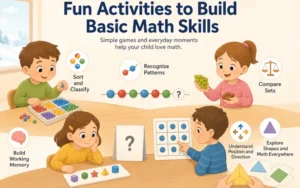
Simple activities at home can make this learning much more meaningful:
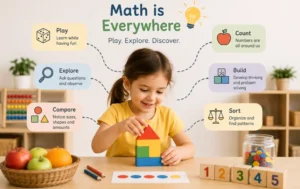
Use everyday objects: Marbles, buttons, building blocks, chestnuts, toys, or pieces of playdough can be used to create different quantities. Ask questions such as, “Which group has more?” or “Can you give me three blocks?”
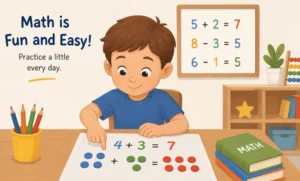
Try hands-on materials: Wooden counting sticks, simple abacuses, number cards, and similar materials allow children to see numbers rather than only hear about them. They can use these objects to practice basic addition and subtraction in a natural way.
Include movement and space: Physical activities can also support mathematical thinking. Sorting objects, arranging toys by size, building with blocks, or moving objects from one place to another helps children develop an early understanding of space, position, and quantity.
The main goal at this age is not to make children complete formal worksheets. It is to help them become comfortable with numbers and curious about how they work.
Actively Supporting Math in Elementary School
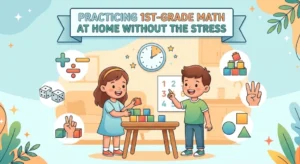
The first years of elementary school are an important period for developing strong math skills. Although children will spend more time working with books, worksheets, and digital resources, hands-on experiences are still extremely valuable.
Parents can connect school mathematics with things children already do at home:
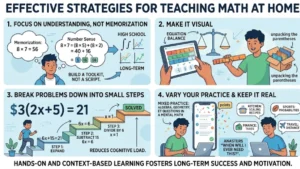
Bring math into everyday life: Cooking provides opportunities to measure ingredients and compare quantities. Shopping can involve counting money and comparing prices. Children can also practice telling time, counting objects, or estimating how many items are in a group.
Choose useful learning materials: Math games, workbooks, puzzles, educational software, and age-appropriate learning apps can provide extra practice. The best resources are those that encourage children to think rather than simply repeat answers.
Parents should also pay attention if math difficulties continue as children move into higher grades. Problems that seem small at first can sometimes become more noticeable when children begin working with larger numbers, fractions, decimals, or more abstract mathematical ideas.
If a child consistently struggles with basic concepts or becomes extremely frustrated during math activities, it is a good idea to talk with the teacher. Teachers can share their observations and help parents understand what kind of support might be useful. Working together is usually much more effective than trying to solve the problem alone.
General Tips for Creating a Successful Learning Environment at Home
Parents who want to support their children’s math learning can keep a few simple principles in mind:
Create a calm environment: Children usually learn better when they can concentrate without constant interruptions. During study time, try to reduce distractions such as phones, television, loud music, or unnecessary noise.
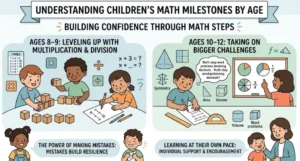
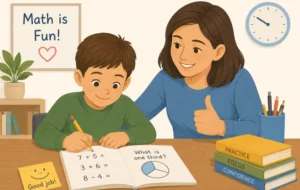
Be patient and encouraging: Children do not always understand a concept immediately. Give them time to think and encourage them to explain their ideas. Avoid making them feel bad when they make mistakes.
Keep sessions short and regular: There is no need for long study sessions every day. Around 20 to 30 minutes of focused practice can be enough for many children. A consistent routine is generally more helpful than occasional hours of extra work.
Stay connected with the school: When helping with homework, try to follow the methods and materials used by the child’s teacher. Teaching a completely different method can sometimes create confusion, especially when children are still learning the basics.
Most importantly, parents do not need to be expert math teachers. A supportive attitude, regular practice, and simple activities from everyday life can make a real difference. When children see that math is useful, understandable, and even enjoyable, they are more likely to approach it with confidence and curiosity.



Post Comment