How Can We Help Children Learn Math?

How Can We Help Children Learn Math?
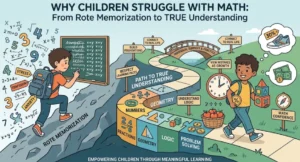
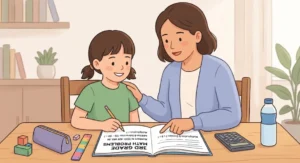
Math can be difficult for many children, but it does not have to be a subject they fear or avoid. With the right approach, mathematics can become an enjoyable way for children to explore, think, and discover new things. Every child learns differently, so it is important to be patient and find methods that match their interests and learning style.
1. Understanding Math Anxiety in Children
Before helping a child improve in math, it is useful to understand why they may feel uncomfortable with the subject. Math anxiety can develop for many reasons, including negative experiences at school, pressure to get every answer right, or teaching methods that make mathematics seem too complicated or abstract.
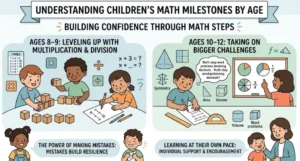
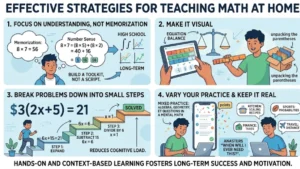
One of the biggest problems is the fear of making mistakes. Some children believe that being good at math means finding the correct answer immediately. When they make a mistake, they may feel that they are simply “not good at math.” Parents and teachers can help change this idea by reminding children that mistakes are a normal part of learning.
It is also important to show children that there can be different ways to solve a math problem. Asking them to explain how they reached an answer can make them feel more confident and help them understand the ideas behind the calculation.
Math anxiety can begin during the early school years and may continue if children do not receive enough encouragement. A child who regularly avoids math homework or becomes very nervous before a math lesson may need extra support and reassurance.
2. The Importance of Play in Learning Mathematics
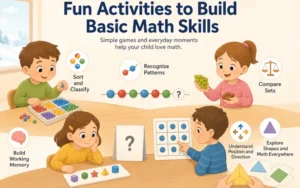
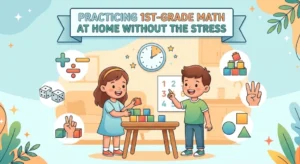
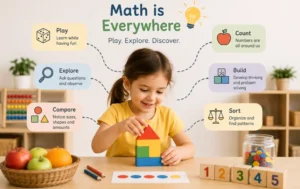
For children, learning through play can make mathematics much more enjoyable. Games, puzzles, building activities, and simple challenges allow children to practice mathematical ideas without feeling as though they are doing difficult schoolwork.
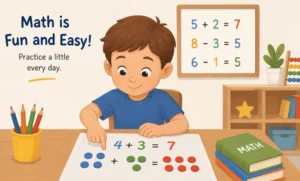
Playing with numbers can help children develop skills such as counting, addition, subtraction, logical thinking, and problem-solving. Board games, card games, dice, and even simple household objects can become useful math tools.
The most important thing is to keep the experience enjoyable. When children are relaxed and interested, they are more willing to try, make mistakes, and try again. A short and enjoyable math game can sometimes be more effective than a long worksheet filled with repetitive questions.
Parents do not need expensive educational toys to make math fun. Counting objects around the house, comparing sizes, sorting toys, or keeping score during a game can all create natural opportunities for mathematical learning.
3. Sparking Curiosity Through the History of Mathematics
Children often become more interested in a subject when they discover the stories behind it. Mathematics has a long and fascinating history filled with unusual discoveries, difficult challenges, and interesting people.
Instead of presenting mathematicians as distant names in a textbook, parents and teachers can introduce them through stories. Archimedes is famous for his excitement over a discovery related to water displacement, while Pythagoras became well known for his work with numbers and geometry. Évariste Galois developed important mathematical ideas at a remarkably young age.
These stories can help children understand that mathematics was created and developed by real people who were curious, creative, and sometimes made mistakes along the way.
History also shows children that mathematical ideas did not simply appear in textbooks. People developed them because they wanted to solve real problems, understand nature, build things, measure distances, or explain patterns. This can make mathematics feel more connected to everyday life.
4. Using Everyday Objects to Teach Math
Children do not need to sit at a desk to learn mathematics. Everyday life provides countless opportunities to practice math in a natural way.
The kitchen, for example, is a great place to explore numbers and measurements. While preparing a recipe, children can measure ingredients, count items, compare quantities, or divide food into equal portions. Doubling a recipe can introduce multiplication, while sharing a cake equally can provide a simple introduction to fractions.
Shopping can also become a math activity. Children can compare prices, count coins, estimate totals, or decide which product costs more. These simple activities help them see that mathematics is useful outside the classroom.
Building and craft activities are another great opportunity. When children construct something with blocks, draw shapes, measure objects, or create a model, they naturally encounter concepts such as length, angles, area, and geometry.
The goal is not to turn every moment into a formal lesson. Instead, parents can simply point out the mathematics that already exists in everyday activities.
5. The Cooperative Approach: Learning Together
Learning math with other people can also help children become more confident. When children work together, they can explain their ideas, listen to different approaches, and discover that there may be more than one way to solve a problem.
Explaining an answer to someone else is especially useful. When a child describes how they solved a problem, they have to organize their thoughts and think carefully about each step. This can strengthen their understanding while also improving communication skills.
Group activities can also change the way children think about mistakes. Instead of seeing a wrong answer as something embarrassing, they can discuss what went wrong and learn from it together.
Parents can use this approach at home by solving puzzles as a family, playing math games, or asking children to explain their reasoning. Teachers can use group challenges and classroom activities to encourage students to share ideas.
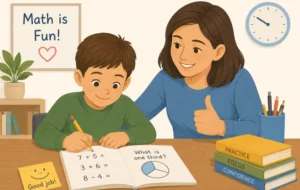
Most importantly, children should learn that mathematics is not about being perfect. It is about asking questions, trying different strategies, learning from mistakes, and gradually finding solutions. With encouragement, patience, and a little creativity, math can become a subject that children enjoy exploring rather than something they are afraid of.


Post Comment