Math Difficulties in Elementary School: Practical Tips for Parents

Math Difficulties in Elementary School: Practical Tips for Parents
It’s Monday afternoon, and homework time has arrived. Your child is sitting at the kitchen table with a math book in front of them, but instead of working, they look frustrated and unsure where to begin. As a parent, you may wonder what you can do to make things easier.
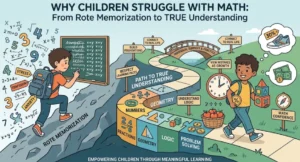
Why Do Children Struggle with Math?
Children can have difficulty with math for many different reasons. Sometimes the problem is simply a missing piece of basic knowledge, while in other cases, a child may need a different way of learning. Some common reasons include:
Gaps in basic math skills: Math is a subject where new topics are usually built on skills learned earlier. If a child has not fully understood addition, subtraction, multiplication, or other basic ideas, later topics can become much more difficult.
Difficulty staying focused: Solving math problems requires attention and patience. A child who gets distracted easily may make simple mistakes or lose track of the steps needed to solve a problem.
A lack of confidence: Some children start to think that they are simply “not good at math.” Once they develop this belief, they may become nervous when they see a math problem and avoid trying altogether.
Learning difficulties: Certain children may have specific learning difficulties, such as dyscalculia, which can make understanding numbers and mathematical relationships more challenging. In these situations, additional support may be helpful.
Tips for Supporting Children Who Struggle with Math
The good news is that parents can do a lot to make math less stressful and more approachable. Small changes in the way children practice can make a real difference.
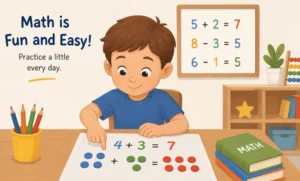
Review the basics regularly: Instead of moving quickly from one topic to another, spend a little time reviewing skills your child already knows. Short and regular practice sessions can be more useful than studying for a long time once a week.
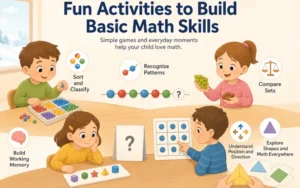
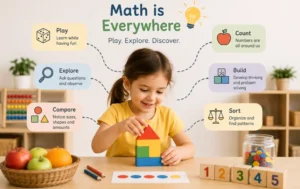
Use pictures and everyday objects: Children often understand a difficult idea more easily when they can see it. Draw simple diagrams, use coins, blocks, toys, or other objects to demonstrate numbers and mathematical relationships.
Bring math into everyday activities: Math does not have to happen only at the homework table. You can practice it while shopping, cooking, setting the table, or planning a trip. Asking questions about quantities, prices, time, or measurements can turn ordinary activities into simple math practice.
Be patient and encouraging: Try to focus on your child’s effort rather than only on whether the answer is correct. A few encouraging words can help children feel more comfortable making mistakes and trying again.
Resources and Tools for Parents
Parents do not have to rely only on school textbooks when helping their children. There are many useful resources that can make learning more interesting and give children extra opportunities to practice.
Math apps: Educational apps can provide short exercises, quizzes, and games that allow children to practice skills in an enjoyable way.
Online math websites: Many websites offer worksheets, explanations, activities, and interactive exercises. These resources can be useful when a child needs additional practice outside school.
Math textbooks and workbooks: Books designed for a child’s age and level can provide clear explanations and plenty of practice. Choose materials that match what your child is currently learning rather than making the work unnecessarily difficult.
Math games: Board games, card games, puzzles, and simple number games can help children practice logical thinking and basic math skills without making learning feel like extra homework.
Online tutoring: If your child continues to have difficulty with a particular topic, individual support from a teacher or tutor may be useful. Having someone explain the same idea in a different way can sometimes make a big difference.
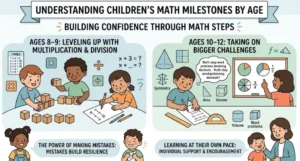
Helping a child who struggles with math can take time, and progress may not happen overnight. The most important thing is to remain patient, notice small improvements, and avoid making your child feel that mistakes are something to be ashamed of. Every child learns differently and at their own pace. With regular practice, encouragement, and the right support, math can gradually become a subject that feels less intimidating and more manageable.






Post Comment