The Importance of Mathematics for 10-Year-Old Children

The World of Math Through the Eyes of 10-Year-Olds
Age 10 is a special period in a child’s thinking, marked by significant changes. They no longer simply learn; they question, compare, and try to understand why the information they’ve learned is important. As they approach the final years of primary school, both their self-confidence and academic perspectives begin to take shape. Mathematics is one of the most striking parts of this process.
For an adult, mathematics often means formulas, exams, and complex calculations. However, for a 10-year-old, mathematics is a very different world. Sometimes it’s a game of intellect, sometimes a mystery to be solved, and sometimes it becomes an area where they say, “I feel powerful when I succeed.”
Math Begins to Seem More “Serious”
10-year-old children begin to feel that mathematics is becoming more difficult compared to previous years. Calculations grow, problems lengthen, and the details they need to consider increase. Fractions, decimals, problem-solving strategies, and multi-step calculations appear more frequently.
This situation creates excitement in some children. Because solving a difficult problem is a sign of success in their eyes. Children, especially those who understand the logic behind it, see mathematics as a kind of brain exercise.
However, for some children, the opposite is true. An educational approach that constantly focuses on the correct answer can cause them to fear making mistakes. Therefore, the relationship between 10-year-old children and mathematics is often shaped not only by knowledge but also by their emotions.
“Why Do We Do It This Way?” Questions Increase
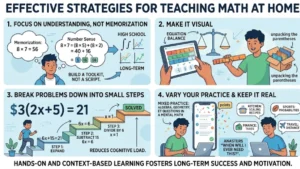
One of the most striking characteristics of this age group is that they are no longer satisfied with rote memorization. They want to know why they are doing a particular operation. They try to understand the logic behind the method the teacher explains.
For example, a child no longer just wants to perform division; they also wonder why it’s done that way. Because for a 10-year-old child, learning is not just about reaching the answer, but about understanding the way of thinking.
Therefore, mathematics becomes a much more enjoyable subject when its logic is explained. Children feel like little scientists. Discovering rules and making connections gives them pleasure.
Peer Pressure and the Perception of Success
Ten-year-old children begin to feel the concept of success more intensely. Class rankings, teacher feedback, and peer performance directly affect them.
A child who believes they are successful in mathematics becomes more engaged and confident in the subject, while children who feel they struggle may withdraw over time. The thought, “I’m not a math person,” can especially begin to form at this age.
However, most children distance themselves from mathematics not because they can’t do it, but because of incorrect learning experiences. Constant criticism, being rushed, or focusing solely on the result can change children’s perspective on the subject.
One of the things children in this age group need most is to feel that making mistakes is a natural part of learning.
Interest Increases When They Connect with Real Life
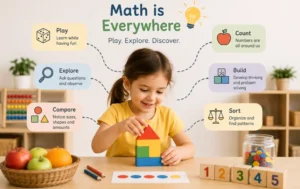
Ten-year-old children now want to see more clearly how mathematics is used in daily life. Because when they can connect the information they learn to real life, their interest in the subject increases significantly.
Calculating discounts on a purchase, figuring out a game’s scoring system, planning time, or understanding numerical data online are all examples of real-world mathematics for them.
Especially for this generation, which has grown up surrounded by technology, mathematics begins to appear as the hidden language of many fields, from game design to computer programming. Once this awareness develops, mathematics ceases to be merely a school subject.
In Conclusion
For 10-year-old children, mathematics is not just a subject consisting of calculations, but a process of learning to think. At this age, children question more, make connections, and want to discover the meaning of what they learn.
Their relationship with mathematics largely depends on their experiences. When supported, patiently guided, and able to understand the logic, children begin to see mathematics not as a field to be feared, but as a world to be explored.
Perhaps what is important at this age is not just teaching children the correct answer, but making them feel the joy of thinking. Because children who truly love mathematics are often not those who memorize calculations, but those who are curious about the meaning behind the numbers.




Post Comment