The Amazing World of Math Through Kids’ Eyes (Ages 8–12)

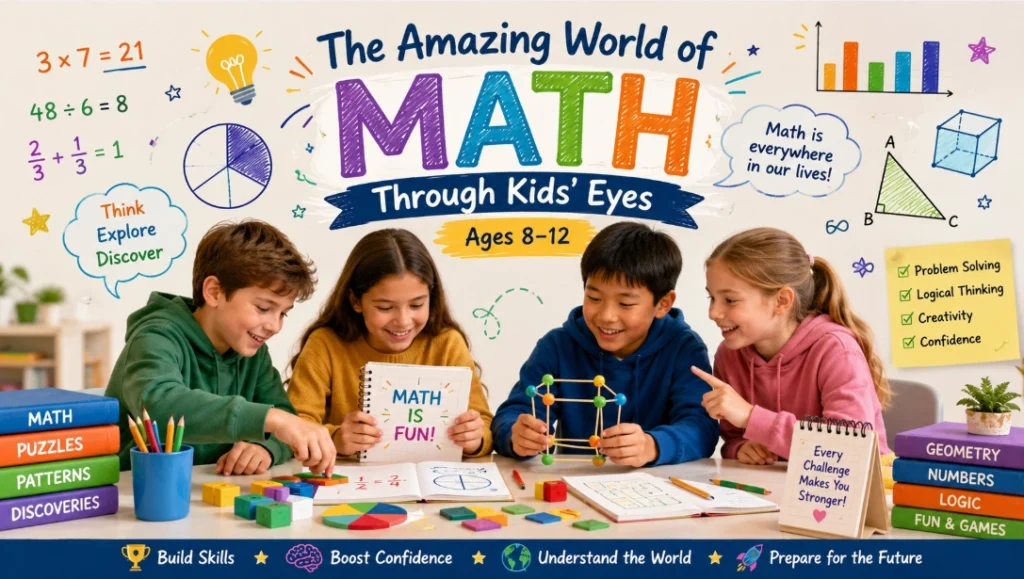
Mathematics may seem like a school subject filled with numbers and rules, but for children between the ages of 8 and 12, math can actually become an exciting adventure. At this age, children begin to notice patterns, solve puzzles, and understand how math connects to the world around them. Through their eyes, math is not only about solving problems on paper — it is about exploring, discovering, and having fun.
Children often experience math in their daily lives without even realizing it. When they share pizza slices with friends, count coins, measure ingredients while baking, or keep score during a game, they are using mathematical thinking. These simple activities help children understand that math is useful and meaningful in real life.
One of the most exciting parts of math for kids is problem-solving. Many children enjoy the challenge of finding answers, especially when math feels like a game or mystery. Activities such as logic puzzles, brain teasers, and number games encourage curiosity and creative thinking. Instead of memorizing rules, children learn to think step by step and develop confidence in their abilities.
At ages 8–12, students also begin to discover different areas of mathematics. Some enjoy working with shapes and geometry, while others love patterns, multiplication tricks, or fractions. Visual learning tools, colorful activities, and hands-on materials make math more enjoyable and easier to understand. When learning becomes interactive, children are more motivated to participate and explore new ideas.
Math also teaches important life skills beyond numbers. It helps children improve concentration, patience, reasoning, and decision-making. Students learn that making mistakes is a natural part of learning and that every challenge can help them grow stronger. These skills are valuable not only in school but also in everyday life.
Technology and games have also changed the way children experience math. Educational apps, interactive videos, and online activities make learning more engaging for modern students. Many children become more interested in math when lessons include animations, competitions, or real-world examples connected to sports, shopping, or science.
Parents and teachers play a big role in helping children develop a positive attitude toward math. Encouraging words, fun activities, and supportive learning environments can help students feel more comfortable and successful. When adults show enthusiasm for math, children are more likely to see it as something exciting rather than difficult.
In the end, the world of math through children’s eyes is full of curiosity, imagination, and discovery. For kids aged 8–12, math is much more than numbers on a worksheet. It is a tool that helps them understand the world, solve problems, and build confidence for the future. With the right support and creative learning experiences, every child can discover the amazing side of mathematics.