What is Dyscalculia?
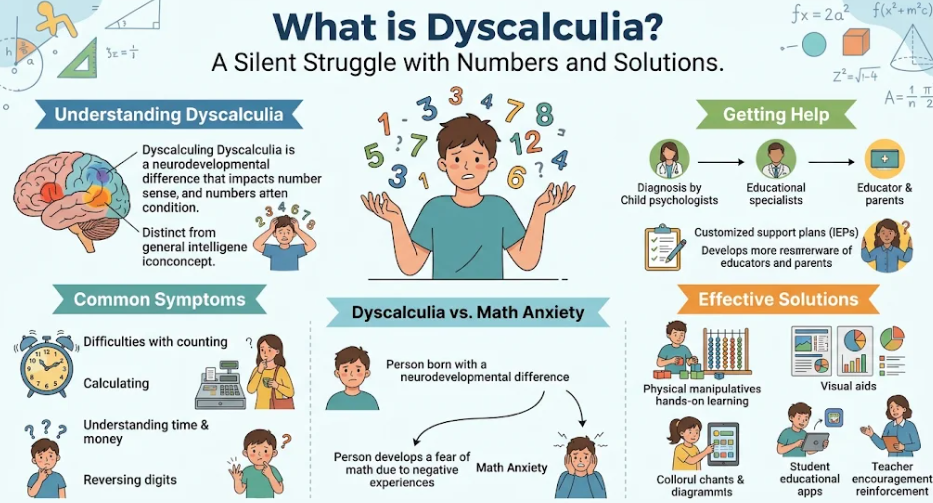
What is Dyscalculia? A Silent Struggle with Numbers and Proposed Solutions
To most people, checking the time, calculating change after shopping, or looking at a measuring cup to follow a recipe might seem completely routine. However, for a significant portion of children and adults around the world, these simple tasks are like maze walls that are difficult to scale. Dyscalculia, much like dyslexia (the learning difficulty associated with reading), is a neurodevelopmental learning difference and is frequently described as “math dyslexia.”
In this article, we will examine what dyscalculia means, the challenges individuals face in daily life, why early diagnosis is critical at this point, and effective support methods that can be applied during this process.
What is Dyscalculia?
Regardless of an individual’s intelligence level, education received, or motivation, dyscalculia is defined as a continuous and persistent difficulty in understanding numbers, making sense of mathematical concepts, and performing arithmetic operations.
It is thought to stem from structural or functional characteristics in the brain regions that process numerical information (particularly the parietal lobe). This condition does not mean that the individual is lazy or lacks mathematical knowledge; on the contrary, the brain perceives and evaluates numbers and quantities in a different way.
What are the Symptoms of Dyscalculia?
Individuals with dyscalculia may experience different challenges depending on their age groups and developmental stages. Symptoms generally begin to show themselves in early childhood:
Preschool and Elementary School Period
Difficulties in Quantity Perception: Struggling to understand which of two different or identical groups of objects is more or less.
Counting Difficulty: Even if numbers can be recited by rote, experiencing delays in grasping the actual value and numerical equivalent of numbers (for example, struggling to understand that the number “5” corresponds to 5 objects).
Habit of Counting on Fingers: Using fingers for extended periods and failing to break the habit even when performing simple addition, subtraction, or multiplication operations.
Confusing Digits: Mixing up similar or inverse numbers such as 3 and 8, or 6 and 9, leading to errors in writing them.
Later Life and Adulthood Period
Time and Spatial Perception: Struggling to read clocks (especially analog clocks with hour and minute hands) and having difficulty remembering days, months, or seasons in order.
Direction Finding Problems: Experiencing serious difficulties with confusing right and left, reading maps, and finding directions.
Calculating Change: Experiencing anxiety when calculating or finding the correct amount of change when making purchases and payments.
Daily Planning: Experiencing misjudgments in estimations of length, weight, or distance (for example, being unable to comment on or estimate how long a task will take or what the distance is).
How is it Different from Math Anxiety?
This does not mean that every individual who struggles with math is dyscalculic. Math anxiety (fear of math) is an emotional barrier that typically develops later as a result of negative experiences, fear of failure, or pressure.
Dyscalculia is a congenital neurological difference that affects a person’s core number sense. However, long-undiagnosed dyscalculia can lead to intense math anxiety and a loss of self-confidence over time.
Diagnosis and Evaluation
Dyscalculia cannot be diagnosed with a single test. The process generally covers the following stages:
Expert Evaluation: Comprehensive assessments conducted by child and adolescent psychiatrists, neuropsychologists, and educational specialists.
Cognitive and Academic Tests: Passing standardized tests that measure numerical skills, memory capacity, and visual-spatial abilities alongside intelligence levels.
Exclusion Criteria: Verifying that the learning difficulty does not stem from visual/hearing impairments, inadequate education, or another neurological disease.
Solutions and Support Ways: How Can One Help?
Dyscalculia is not a “disease” that disappears; it is a lifelong learning difference. However, with the right strategies, a patient approach, and education, individuals can successfully overcome this challenge:
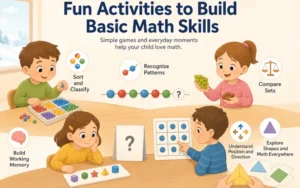
Using Concrete Materials: Working with materials such as fingers, beads, blocks, counters, brain games, and abacuses to make abstract mathematical concepts concrete can support permanent connections in the brain.
Visual and Auditory Supports: Colorful charts, number lines, rhythmic studies, and multi-sensory digital educational tools facilitate learning.
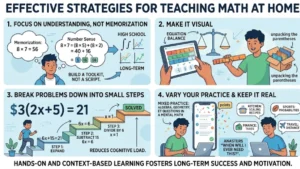
Step-by-Step Progress: Breaking complex problems down into small, manageable pieces and reinforcing every successful step reduces anxiety.
Individualized Education Plan (IEP): Adapted and arranged exam durations and alternative evaluation methods can be used in the school environment according to the student’s needs.
Supporting Self-Confidence: Discovering and appreciating the child’s strong areas outside of mathematics (such as art, sports, verbal skills) is of great importance in protecting and raising self-confidence.
Conclusion
Dyscalculia requires using a different roadmap to cross these hidden walls behind numbers. With early awareness, patient guidance, and correct pedagogical approaches, individuals with dyscalculia not only make peace with mathematics; they also reveal their potential at the highest level and can be successful and happy in every area of their lives.









Post Comment