How Does Mathematics Shape the Minds of Children Aged 8-12?

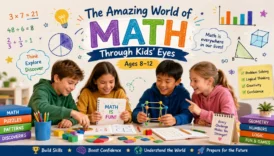
When we think of mathematics, most of us immediately think of formulas, multiplication tables, or pages of equations. However, the other side of the coin is much more colorful. Especially for children aged 8-12, mathematics is not just a school subject studied to pass exams; it is a magical tool that fundamentally changes their way of understanding the world, reasoning, and thinking. During this critical transition period, children unknowingly lay the foundations of critical thinking skills they will use throughout their lives through mathematics.
So, what exactly changes in this age group? As children open the door to abstract thinking, they embark on a journey from simple arithmetic to fractions, from the mysterious world of geometry to patterns. This journey is actually a tremendous mental training that pushes the limits of the brain. Mathematics teaches children not to give up immediately when faced with an obstacle, but to break down the problem into parts and tackle it.
The Rhythm of Logic and Its Reflection in Life
The clearest area where mathematics touches young minds is undoubtedly logical thinking skills. When a child solves a math problem, they gather clues like a detective, organize their thoughts, and develop a step-by-step strategy. The good thing is that this discipline doesn’t just stay on paper. You’ll notice that a child who makes a habit of solving a multi-step math problem organizes their ideas more clearly when writing a composition in Turkish class or carries out a science project much more systematically.
Contrary to Popular Belief: Mathematics and Creativity
It is generally thought that mathematics is a very rigid and boring field with only one correct answer. However, this is a great misconception. Yes, the result is singular, but the paths to that result are infinite! The real breakthrough occurs when children between the ages of 8 and 12 discover that the same problem can be viewed from different perspectives. Some children solve the problem by visualizing it and drawing shapes; some develop practical strategies mentally, while others choose the safe haven of formulas. Freely exploring different solutions fosters flexible thinking skills and a “I can do this” feeling in children.
Patience, Focus, and the Changing World of Education
At this age, word problems and logic puzzles become a little more complex. This forces children to think more deeply and, most importantly, to be patient. Those few minutes spent at the beginning of a difficult problem are actually a vaccine of perseverance against future challenges. Moreover, since dealing with equations and memorizing formulas requires serious concentration, regular math practice visibly increases memory and attention span.
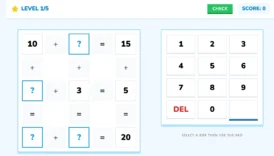
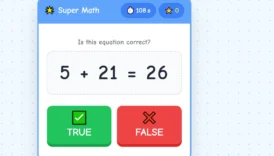
Today, the relationship children have with mathematics is also changing. It’s no longer just boring blackboards; educational games, interactive digital platforms, and applications are entering the picture. When the learning process takes on a fun and interactive game form, children’s natural curiosity about numbers and patterns awakens spontaneously.
Social Connections That Transcend Classroom Walls
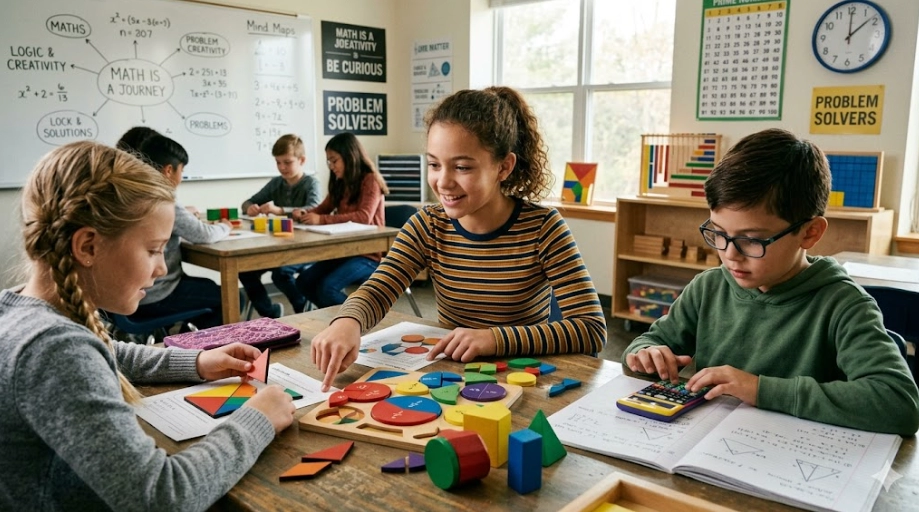
Mathematics is not, as is often thought, a solitary activity. In today’s classrooms, children come together with their peers and exchange ideas, asking questions like, “How did you solve this problem?” and “Why didn’t my strategy work?” These collaborative discussions develop children’s empathy and enable them to defend their own ideas in front of a group. The feeling of accomplishment a child experiences when solving a puzzle together with their friends is indescribable. When a child overcomes a difficult problem through their own efforts, the bright smile that appears on their face becomes fuel for all subsequent challenges.
In short:
The 8-12 age range is the golden age of mental development. During this period, mathematics transcends the pages of a textbook and transforms into a life philosophy that shapes a child’s character, patience, and problem-solving reflexes. As we raise the independent, confident, and analytically thinking individuals of the future, we need this quiet but powerful guidance of mathematics more than ever.