Counting Smiles: Fun Math Activities for Kids
 By
By Counting Smiles: Fun Math Activities for Kids
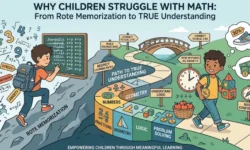
What if hearing the word “math” made your child excited instead of worried? For many parents, this may seem difficult at first. Math is sometimes seen as a subject full of rules, formulas, and difficult problems. Because of this, children can easily lose interest or even become anxious about it.
But math is actually everywhere in our daily lives. We use numbers when counting steps, telling the time, baking cookies, shopping, playing games, or building something with LEGO. When children discover this, math can become much more enjoyable and meaningful.
The good news is that learning math does not always have to mean sitting at a desk and solving worksheets. Simple games, everyday activities, and hands-on challenges can help children understand mathematical ideas while having fun. These activities can also improve their confidence, logical thinking, and problem-solving skills.
In this article, we’ll look at some fun math activities for children, especially those in upper elementary and middle school. The goal is simple: make math feel less like homework and more like an adventure.
Why Should Math Be Fun?
Children naturally learn by playing, exploring, and asking questions. When math becomes part of that process, learning can feel much more natural.
It Can Reduce Math Anxiety
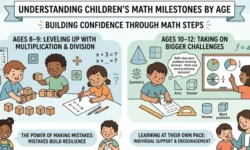
Some children become afraid of making mistakes in math. Fun activities can help change that attitude. When a wrong answer is treated as part of learning rather than a failure, children become more willing to try again.
It Develops Problem-Solving Skills
Math games are not only about finding the correct answer. Children also have to think about strategies, make decisions, and figure out different ways to solve a problem. These skills are useful both inside and outside the classroom.
It Makes Learning More Memorable
Children are more likely to remember something when they have enjoyed the experience. A math game or activity can turn an abstract idea into something they can see, touch, and experience.
It Builds Confidence
Successfully completing a challenge, winning a game, or simply understanding a difficult concept can give children a real sense of achievement. Over time, these small successes can help them feel more confident about mathematics.
Fun Math Activities for Older Kids
As children get older, math becomes more challenging. They begin working with fractions, decimals, geometry, percentages, graphs, and more complicated calculations. At this stage, connecting math to real-life situations can make learning much more interesting.
1. Multiplication and Division Bingo
Turn multiplication or division practice into a simple bingo game.
Create bingo cards containing answers to different problems. Then call out questions such as “8 × 7” or “72 ÷ 9.” Children solve the problem and check whether the answer appears on their cards.
The first player to complete the agreed pattern wins.
This is a simple way to practice basic operations without making the activity feel like repetitive practice.
2. Around the World
This classic classroom game is a great way to review math facts.
Have students sit or stand in a circle. Choose two students to compete. Show them a math question, and the first student to answer correctly moves on to challenge the next student.
You can use multiplication, division, fractions, decimals, or any other skill the class is currently studying.
3. Math Jeopardy
Create a Jeopardy-style math game with categories such as:
Fun with Fractions
Geometry
Data and Graphs
Multiplication
Division
Math Challenges
Each category can contain questions worth different amounts of points. Students can play individually or in teams.
The competitive element can make review sessions much more exciting while encouraging students to work together.
4. Math Facts Race
Divide the class into two or more teams. Give each team the same set of math problems or a multiplication grid.
The first student solves one problem and then passes the marker to the next teammate. The process continues until the team finishes.
The important part is not just speed. Encourage students to check their answers carefully so that they understand that accuracy matters too.
5. Area Dice Game
This is a fun way to introduce or practice area.
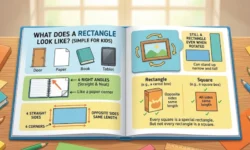
Students work in pairs and roll two dice. One number represents the length of a rectangle, while the other represents its width. They draw the rectangle on graph paper and calculate its area.
Players continue taking turns and keep track of their total area. At the end, they compare their results.
It is a simple game, but it helps children see how multiplication connects directly to geometry.
Math in Everyday Life
One of the easiest ways to make math meaningful is to show children where they already use it.
6. Create a Class Poll
Ask students a simple question, such as:
“What is your favorite animal?”
Students vote for their choice, and the class records the results. Then they can turn the information into a bar graph or pictograph.
Older students can take the activity further by calculating percentages and comparing the results.
This turns a simple question into a lesson about data collection, graphs, and percentages.
7. Plan a Budget
Give children a pretend situation. For example, they could plan a birthday party, a class event, or a short family trip.
Give them a budget and ask them to decide how to spend the money.
They may need to calculate prices, add expenses, compare options, and work out how much money is left.
This activity shows children that math is an important part of everyday decision-making.
8. Cooking with Fractions
The kitchen is a great place to practice fractions.
For example, ask:
“A recipe needs 1/2 cup of flour. What happens if we double the recipe?”
Children can also practice measuring ingredients, adding fractions, and dividing food into equal portions.
This makes fractions much easier to understand because children can see how they work in a real situation.
9. The Leaning Tower of Pisa Project
Turn a famous landmark into a math investigation.
Students can research the Leaning Tower of Pisa and explore its height, measurements, and angle of inclination. They can also create a model of the tower and measure different parts of it.
For an extra challenge, students could plan a pretend trip to Pisa and calculate transportation, accommodation, and food costs.
This single project can combine mathematics with geography, history, measurement, and budgeting.
Collaborative Math Challenges
Math does not always have to be an individual activity. Working with classmates can help children learn from one another and discover different ways to solve the same problem.
10. Solve and Sign
Give each student a worksheet containing several math problems.
Instead of asking students to complete the entire worksheet themselves, have them move around the classroom and solve one problem on another student’s sheet. After solving it, they write their initials next to the answer.
Students can then discuss their solutions and check each other’s work.
This activity encourages communication, cooperation, and peer learning.
11. The Big Paper Chain Challenge
Divide students into small teams. Give each team a series of math problems.
Whenever the team solves a problem correctly, they earn one strip of paper. They use the strips to build a paper chain.
At the end of the activity, the team with the longest chain wins.
The activity combines teamwork, problem-solving, and a little friendly competition.
Making Math Part of Everyday Life
The best math activities do not always require special materials or complicated preparation. A deck of cards, some dice, a measuring cup, a shopping receipt, or even a few LEGO pieces can become useful math tools.
The most important thing is to give children opportunities to explore, make mistakes, ask questions, and try again.
When children begin to see math as something they can use, play with, and understand—not simply a list of rules to memorize—their attitude toward the subject can change dramatically.
So the next time your child says, “I don’t like math,” try turning the problem into a game. You might be surprised to see just how quickly a few numbers can turn into a few smiles.